
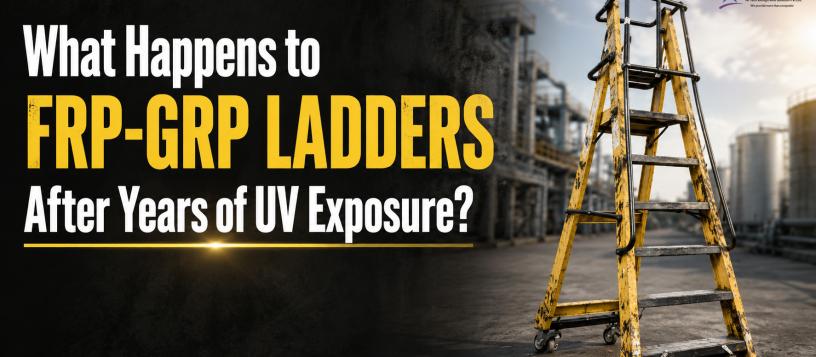
UV exposure changes how an FRP-GRP ladder looks well before it changes how it performs, fading the surface and roughening the rails long before the ladder actually becomes unsafe. A ladder that has spent five monsoons and five summers on a rooftop rarely looks like the one that rolled out of the factory. A reliable FRP-GRP ladder manufacturer in India builds for exactly this kind of long-term exposure, so the ladder you buy today still performs the way it should years from now.
Table of Contents
- How Does Prolonged Sun and Weather Exposure Affect the Surface of an FRP-GRP Ladder?
- How Can You Tell if a Weathered FRP-GRP Ladder Needs Replacement?
- Do Years of Outdoor Exposure Affect an FRP-GRP Ladder’s Strength the Way It Does With Metal?
- Why Do FRP-GRP Ladders Hold Up Better Than Wood or Metal in Outdoor Industrial Settings Over the Years?
- What Maintenance Does an FRP-GRP Ladder Need to Stay Safe After Long-Term Outdoor Use?
How Does Prolonged Sun and Weather Exposure Affect the Surface of an FRP-GRP Ladder?
Sun exposure slowly breaks down the resin layer on the surface, the part responsible for the ladder’s glossy finish, turning it pale and rough over years of use.
Rain and shifting temperatures add their own damage too, opening tiny cracks that let moisture reach the layers underneath. As the protective layer thins out, the fine glass strands start to peek through, giving the surface an almost sandpapery feel. It looks worse than it is, and in most cases, the ladder is still perfectly safe to use.
This matters beyond looks, too. FRP-GRP’s resin layer is also what keeps the ladder non-conductive, which is why its condition is worth watching closely if the ladder is used near live electrical work.
How Can You Tell if a Weathered FRP-GRP Ladder Needs Replacement?
Not every faded ladder needs to go straight to the scrap pile. A few honest checks will tell you whether it is still safe to use.
- Rough, Sandy Surface: Rub a rail, and if it leaves fine dust or an itchy feeling on your palm, the protective layer has worn through.
- Visible Cracks or Splits: Hairline cracks along the rails or rungs are a sign moisture may already be getting in.
- Flex or Wobble Under Weight: If the ladder feels less steady than it did, that calls for a proper inspection.
- Faded but Smooth: Colour loss without roughness or cracking rarely means anything beyond how the ladder looks.
You May Also Like: How to Inspect, Use, and Store an FRP-GRP Ladder Properly
Do Years of Outdoor Exposure Affect an FRP-GRP Ladder’s Strength the Way It Does With Metal?
Metal ladders rust from the inside as corrosion spreads through the material, while the glass fibres inside an FRP-GRP ladder stay largely unaffected by weathering, since UV and moisture act mainly on the resin layer, not the fibres underneath.
The surface weathers, but the strength underneath holds up. Steel loses strength as rust works through it over time. That said, weathering isn’t something to ignore completely. If cracks let in enough moisture and dirt over the years, the ladder should be handled with more caution around electrical work, since that becomes a safety concern rather than a strength one.
Why Do FRP-GRP Ladders Hold Up Better Than Wood or Metal in Outdoor Industrial Settings Over the Years?
Wood swells, splits, and rots outdoors over time, while metal rusts and turns brittle at the joints. FRP-GRP ladders sidestep both, since glass fibre doesn’t rot or corrode the way natural or metal materials do.
It’s why the same fibre-and-resin build shows up across an industrial platform ladder supplier’s range and in every extension ladder manufacturer’s catalogue. The material earns its place in demanding outdoor settings, not just single-piece step ladders.
Plants, warehouses, and construction sites keep reaching for it because it just doesn’t need the upkeep wood and metal do. That’s why India is the next manufacturing hub for this category, with buyers well beyond its borders now sourcing FRP-GRP ladders built for the long haul. Arham Composite supports that demand with export orders starting from as few as 50 ladders, and private labelling for distributors who want it branded under their own name.
What Maintenance Does an FRP-GRP Ladder Need to Stay Safe After Long-Term Outdoor Use?
A little maintenance routine goes a long way toward keeping an outdoor ladder both safe and good-looking. It doesn’t take much time or effort.
- Regular Cleaning: Dirt, oil, and grease are abrasive and will wear down the surface faster than sunlight alone.
- Shaded Storage: Keep the ladder under cover or indoors when it is not in use, rather than leaving it out around the clock.
- Surface Inspection: Feel the rails every few months to discover roughness or cracks early.
- Weather Cover: Use a breathable tarp during long idle periods to keep rain and direct sun off the surface.
Choose the FRP-GRP Ladder Built To Outlast the Elements
Years outdoors will always change how a ladder looks, but they don’t have to compromise how safely it performs, as long as you know what to watch for. A rough surface isn’t a red flag on its own, but cracks, wobble, or exposed fibres are. Choosing a ladder built for years of sun and rain from the start means dependable equipment long after the shine fades.
Arham Composite offers FRP-GRP ladders built for years of outdoor use, whether you’re sourcing for a single site or an export supply line. Get in touch with us, and we’ll walk you through load ratings, custom sizes, and lead times based on where the ladders are headed.
There’s more coming on industrial safety equipment, so keep an eye out for our next post.
Frequently Asked Questions
- How long do FRP-GRP ladders typically last outdoors?
With basic care, they can stay in safe working condition for many years despite visible surface wear.
- What does a faded surface usually mean for ladder safety?
Faded colour is mostly a sign the ladder has spent time outdoors, and regular cleaning and shaded storage can slow it down. On its own, it’s rarely a safety concern.
- How often should an outdoor FRP-GRP ladder be inspected?
A quick check every few months is enough to catch early cracks or roughness before they become a problem.
