
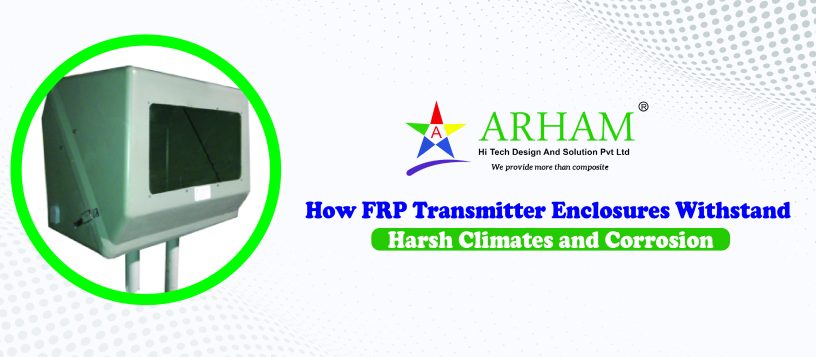
If you’re in charge of keeping electronics safe outdoors, you know how crazy the weather can get. From scorching sun to heavy rain, dust, and salty air, your equipment goes through a lot. That’s why an FRP transmitter enclosure is so useful. It wraps your transmitters in protection against tough climates and corrosion.
It’s worth looking at how FRP enclosures protect transmitters in the first place, why they work better in rough conditions, and what you should keep in mind when selecting one.
What Makes an FRP Transmitter Enclosure Special
You might be asking yourself, what is an FRP transmitter enclosure, and how does it work? It mostly comes down to the material. Fiberglass-reinforced plastic is made by bonding strong fibers with resin, which results in a housing that’s both lightweight and long-lasting.
Once the transmitter is installed, it stays protected from things like rain, dust, heat, and sun exposure. Fiberglass provides the structure, while the resin coating protects against moisture and chemicals. Because of that, the equipment inside stays safer and tends to last much longer, even in harsh environments.
Why You Might Need One
Ask yourself: Have your transmitters ever overheated in the sun? Have you ever noticed corrosion or small damage after a storm? Even occasional issues can cause downtime and repairs. Using an FRP transmitter enclosure helps keep your equipment safe in all seasons.
Here are a few benefits you’ll notice right away:
- Handles corrosion better than metal, even in places with salt in the air, high humidity, or chemical exposure
- Doesn’t become brittle or fade just because it’s been sitting in the sun for long periods
- Manages both heat and cold well, which helps keep the equipment inside more stable
- Strong without being heavy, so it’s easier to move, mount, and install without sacrificing durability
Key Features You’ll Appreciate
If you’re considering an FRP enclosure, it’s worth looking at what makes it stand out.
- Helps keep moisture and dust away from sensitive electronics, which is usually where problems start
- Holds up better than expected against small bumps or debris, especially during bad weather
- Comes in different sizes, so fitting it around existing equipment is usually simple
- Doesn’t need much ongoing maintenance, which saves time and avoids frequent repairs
Practical Benefits at a Glance
- Works reliably in all weather conditions
- Reduces long-term maintenance costs
- Lightweight and easy to install
- Supports a long service life for transmitters
How FRP Enclosures Handle Extreme Weather
Different climates can really test your equipment. In hot and humid areas, transmitters risk overheating and corrosion. FRP enclosures handle these issues easily since they don’t transfer heat, repel moisture, and resist UV wear.
In colder areas, ice and snow can put a lot of stress on equipment. FRP helps by providing insulation and enough strength to handle impacts from freezing conditions. Unlike metal, it’s far less likely to freeze up, warp, or crack, which cuts down on repeated repairs or replacements.
Easy to Use and Versatile
Can these enclosures be used for all types of transmitters? Yes. FRP enclosures work for power, communication, and control equipment. These enclosures are versatile and can be used for power transmitters, communication equipment, control systems, and similar devices. Some models include cutouts, windows, or brackets so you can set them up without any fuss.
They are so user-friendly because:
- Super easy to transport and set up
- Quick cleaning keeps it in top shape
- Adaptable to fit any transmitter or device
- Strong and built to last with no additional coatings
Read On: The Rise of Data Centres in India: Why Arham’s FRP Ladders Are the Best Choice for the Industry
Comparing FRP to Other Materials
Looking at options, many wonder how do Arham’s enclosures compare to metal or plastic alternatives:
- Metals are durable but prone to rust and can be hard to move around.
- Standard plastics may crack in hot weather and fade from sunlight.
- FRP is the middle ground: strong, light, resistant to corrosion, and UV-proof.
If you want reliability and minimal maintenance, FRP is often the smarter choice.
Choosing the Right FRP Enclosure
As you decide on an FRP transmitter enclosure, it helps to ask: Are these enclosures resistant to rain, dust, and extreme weather?
Look for these qualities when deciding:
- Survives harsh conditions: Sun, rain, dust, or snow won’t slow it down.
- UV and corrosion safe: Stays strong and looks good year after year.
- Fits your gear perfectly: Comes in sizes and models to match your equipment.
- Quick to install: Easy to move around and requires very little maintenance.
Conclusion
If keeping your outdoor transmitters safe and reliable matters to you, a FRP transmitter enclosure is a solid investment. It protects against harsh climates, corrosion, UV exposure, and mechanical stress. With options that are lightweight, durable, and easy to maintain, it is designed to make your life easier while keeping your equipment safe.
Make sure your transmitters stay safe and working with Arham Composite’s FRP enclosures, no matter the environment.
Frequently Asked Questions
- How does an FRP transmitter enclosure protect my equipment?
It shields transmitters from rain, dust, heat, cold, and UV exposure while resisting corrosion and impacts.
- Can FRP enclosures handle extreme weather?
Yes, they stay strong in hot, cold, humid, or snowy conditions without cracking, warping, or fading.
- Are FRP enclosures easy to install and maintain?
Absolutely, they’re lightweight, easy to set up, and require very little maintenance over time.
