
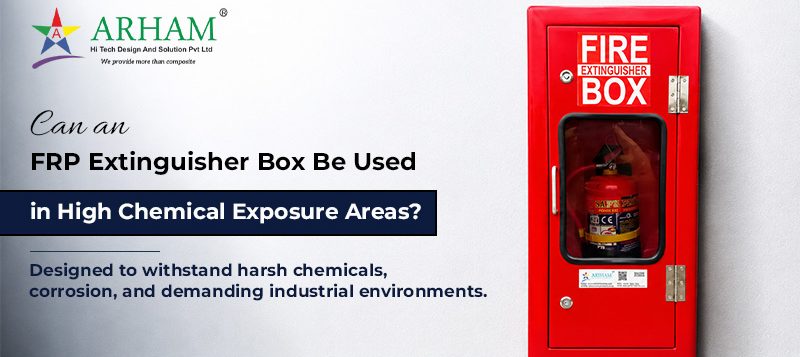
FRP extinguisher boxes are built for high-chemical-exposure areas. The material doesn’t react to chemical fumes, moisture, or acidic environments, making it a practical choice for chemical plants, refineries, and coastal facilities.
In chemical plants, refineries, and coastal facilities, the box around the extinguisher is exposed to the same fumes, moisture, and salt air as everything else on site. Steel rusts, paint flakes, and hinges lock up. By the time someone needs the extinguisher, the box has already become the problem. Arham’s FRP GRP Extinguisher Box is designed specifically for those conditions.
Table of Contents
- Which Chemicals Can an FRP Extinguisher Box Resist?
- Is an FRP Extinguisher Box Safe to Install in a Chemical Plant or Refinery?
- Does Chemical Exposure Affect the Colour or Structure of an FRP Extinguisher Box Over Time?
- What Makes FRP Better Than Steel for Extinguisher Boxes in Corrosive Environments?
- How Do I Know if an FRP Extinguisher Box Is Rated for the Chemicals on My Site?
Which Chemicals Can an FRP Extinguisher Box Resist?
An FRP fire safety enclosure resists acids, alkalis, solvents, salt spray, and most industrial cleaning agents. For particularly aggressive substances, confirm the resin system with your supplier before ordering.
FRP generally resists
- Acid Resistance: FRP is resistant to dilute and concentrated acids such as sulphuric and hydrochloric without surface degradation.
- Caustic and Alkali Resistance: Alkalis and caustic solutions that would strip a steel surface don’t affect the material.
- Coastal and Marine Conditions: Salt spray and coastal humidity are among the most common causes of steel box failure. FRP doesn’t react to either.
- Oils, Fuels, and Solvents: Common industrial solvents, oils, and fuels sit on the surface without breaking it down.
- Washdown Chemical Resistance: Cleaning chemicals used during normal washdown procedures do not affect the box and finish.
Is an FRP Extinguisher Box Safe to Install in a Chemical Plant or Refinery?
An FRP extinguisher box is a safe choice for chemical plants and refineries. Steel cabinets in these environments corrode from the outside in, often invisibly, until the door won’t open or the mounting has weakened. FRP has no metal in the body, so it has no fumes or moisture to react with.
Refineries also deal with electrical hazards. FRP is non-conductive, which matters when the corrosion-resistant extinguisher housing is mounted near switchgear or cable runs. Steel in that position carries risk, but fibreglass doesn’t.
Does Chemical Exposure Affect the Colour or Structure of an FRP Extinguisher Box Over Time?
The colour and structure of an Arham chemical-resistant fire equipment box hold up over time. The material is UV-stabilised, so colour distortion is not a concern even with prolonged sun and chemical exposure outdoors. Structural integrity in corrosive conditions is maintained far longer than that of steel alternatives.
You May Like: What Features Should You Look for in an FRP GRP Fire Extinguisher Box?
What Makes FRP Better Than Steel for Extinguisher Boxes in Corrosive Environments?
Steel needs protecting. FRP does not. In chemical or coastal environments, a steel cabinet needs coating, inspection, and eventual replacement as corrosion sets in. A GRP fire extinguisher cabinet skips most of that. No rust, no flaking paint, no seized hinges. It just does its job.
Why Site Managers Switch to FRP:
- No Rust: Chemical fumes, salt air, and moisture have nothing to corrode. The material simply doesn’t react.
- Finish Not Applied: Finish is a part of the material and has not been added. It will not chip or wear off.
- Easy to Handle: It’s lighter than steel, so one person can install it without it being a two-person job.
- Built to Last: In environments that wear steel down quickly, FRP keeps going without the upkeep.
How Do I Know if an FRP Extinguisher Box Is Rated for the Chemicals on My Site?
Ask for the resin specification and cross-reference it against your site’s chemical register. A reputable supplier will provide documentation on what the box has been tested against. The label “FRP” alone doesn’t tell you much. If the hinges and locks are mild steel, the fibreglass body doesn’t help much. A properly specified box will have non-corrosive hardware throughout.
Conclusion
A fire extinguisher is only useful if it’s accessible when needed. In corrosive environments, the box around it matters as much as what’s inside. FRP holds up where steel doesn’t.
Arham Composite offers a fibreglass extinguisher storage box that maintains its structural integrity, resists environmental conditions, and keeps the equipment inside accessible and ready. For chemical plants, refineries, coastal facilities, and anywhere corrosion is a daily reality, it is simply the more reliable choice. Contact Arham Composite to discuss your site’s specific chemical environment and get the right specification from the start.
Up next, the differences between canopy types and what those differences mean for your specific installation environment.
Frequently Asked Questions
- Can an FRP extinguisher box be wall-mounted in outdoor locations?
The box is built for outdoor use and handles harsh weather and UV exposure without degrading. The fixing method will depend on the wall substrate and site conditions.
- Does an FRP extinguisher box need repainting or surface treatment over time?
No, the material is UV-resistant and holds its colour without recoating. No maintenance is required under normal conditions.
- Can an FRP extinguisher box withstand chemical exposure and high temperatures?
Yes, the material resists acidic environments, including continuous exposure up to 70°C, making it suitable for chemical and petroleum industry sites.
