

Falling from a high place causes terrible injuries and ruins projects. Many workers just grab whatever climbing gear they find and rush up without looking at the frame. If you work around electrical lines or harsh chemicals, picking the right gear is your first line of defence. Using a solid FRP-GRP Ladder protects you from shocks and holds up against tough weather. However, even the strongest tools only keep you safe if you actually take the time to check the parts, set the base up right, and put it away securely after your shift.
Table of Contents
- Why Do Most Climbing Accidents Actually Happen?
- How Do You Set Up Your Equipment Correctly?
- What Are the Best Habits for Climbing and Storing?
Why Do Most Climbing Accidents Actually Happen?
The biggest reason people fall is that they rush the job. When someone needs to change a lightbulb or fix a high wire, they grab the closest tool without inspecting it. They might miss a huge crack in the side rail or a missing rubber foot at the bottom. When they put weight on that damaged section, the whole frame shifts or snaps, sending them straight to the floor. Taking two minutes to look at the side rails saves you from a massive hospital bill.
Another major problem comes from ignoring the ground. You can have a brand-new, heavy-duty frame, but if you set it on loose gravel or muddy dirt, it will slip. The feet need a solid surface to grip. People also try to carry too many tools at once, throwing off their balance. Learning workplace ladder safety and climbing techniques stops these basic mistakes before someone gets seriously hurt.
How Do You Set Up Your Equipment Correctly?
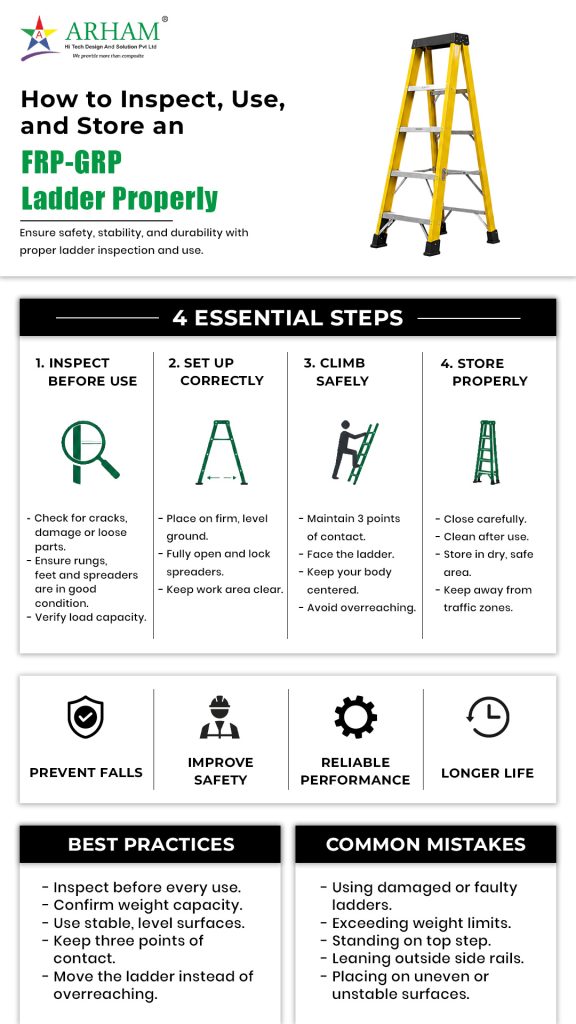
You must prepare your space before you ever put a foot on the bottom rung. Following a proper ladder setup and fall prevention guide takes the guesswork out of the process. You can see these visual steps directly in this safety video Ladder Safety: How to Inspect, Use & Store a Ladder Properly to understand exactly what to look for.
- Check for Physical Damage: Run your hands along the side rails and look at every single step. Look for deep cracks, bent metal pieces, or missing rubber grips on the bottom feet. If you see any loose parts or heavy damage, do not use it under any circumstances.
- Confirm the Load Capacity: Every piece of climbing gear has a strict weight limit printed on a side sticker. You have to add your own body weight to the weight of your heavy toolbelt and the materials you are holding. If that total number goes over the limit, the frame could buckle.
- Find a Flat Surface: You absolutely must place the bottom feet on hard, level ground. If the floor is uneven or covered in slippery oil, the base will slide out from under you. Never put the feet on top of boxes, loose dirt, or wooden pallets to try and gain extra height.
- Lock the Middle Spreaders: Once you open the frame wide, you have to push the metal arms down until they snap into a straight line. These spreaders lock the entire structure together so it stays stiff. If you leave them bent, the sides will fold inward as soon as you climb up.
What Are the Best Habits for Climbing and Storing?
Inspecting and using a ladder safely means knowing how your body weight affects the frame. You also need to know how to pack the gear away so it doesn’t get damaged overnight. Follow these safe ladder storage and maintenance tips as it will help to keep everything in good working order:
- Keep Three Points of Contact: Always face the rungs as you go up or down. Keep two hands and one foot, or two feet and one hand, touching the frame at all times. This constant contact stops you from falling backward if your boot slips on a step.
- Stop Reaching Too Far: Keep your belt buckle positioned right in the middle of the side rails while you work. If you lean too far to the left or right to grab a wire, the whole frame will tip over sideways. Just climb down and move the base closer to your work spot.
- Close It Carefully: When the job is completely finished, do not just kick the spreaders and let the frame slam shut. Push the metal locks up smoothly by hand and bring the sides together slowly. Dropping it or throwing it into a truck breaks the hinges and ruins the side rails.
- Store in a Dry Area: Move the equipment into a clean, dry shed or warehouse room away from moving vehicles. Leaving it out in the middle of a busy floor creates a major tripping hazard for other workers. Keeping it dry also stops the metal bolts from rusting over time.
Keep Your Crew Safe on Every Shift
Taking a few minutes to check your gear makes the difference between a safe shift and a severe accident. You have to look at the frame, lock the hinges, and climb with total focus. When you respect the equipment and store it out of the weather, it lasts longer and keeps your team protected on every single job.
Upgrade Your Climbing Gear Now
Stop risking your safety on old, damaged step-stools. If you need equipment built for heavy use and high voltage areas, visit Arham Composite to view reliable options that protect your crew.
Frequently Asked Questions
How do I know if the frame can hold my weight?
Look at the manufacturer sticker on the side rail. It clearly states the maximum load capacity. Make sure you calculate your body weight plus any heavy tools you are carrying before you step up.
What are the three points of contact rule?
That means you always have two hands and one foot, or two feet and one hand, firmly on the rungs or rails. That way, if you slip while climbing, you don’t fall all the way down.
Why shouldn’t I leave the gear outside overnight?
Leaving it out exposes the metal hinges and bolts to rain, which causes heavy rust. It also creates a tripping hazard for people walking through the area during the next shift.
