
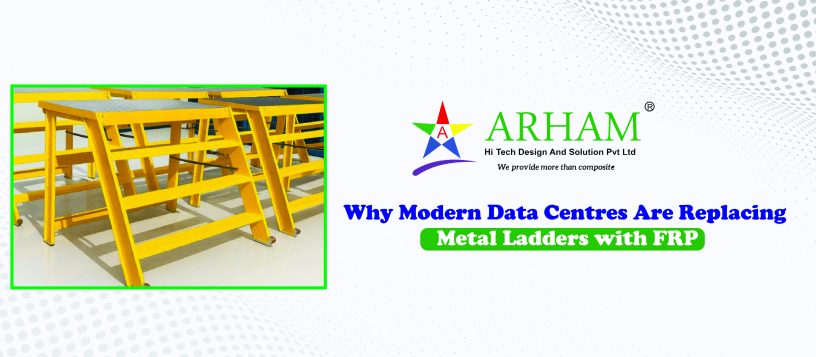
The work inside a data centre leaves no space for compromise. Whether it is routine inspections or quick cable adjustments, technicians need tools that support them without adding risks. That’s exactly why the high-performance FRP ladder fits right in. In today’s setup, safety and convenience matter as much as efficiency.
Why Data Centres Are Moving Away from Metal
Metal ladders have served people for decades, yet they come with issues in high-power environments. Data centres are filled with electrical cables, humidity risks and long operational hours, which makes metal ladders feel outdated. This brings us to an important question: Why choose FRP over metal in spaces like these? Here are a few reasons professionals are upgrading:
- Metal ladders conduct electricity, which increases risk in areas filled with cables and electrical panels.
- Rusting becomes an issue in humid or temperature-controlled rooms.
- Weight is another challenge, especially during frequent movement across rows of racks.
FRP ladders solve all these problems by offering a cleaner, safer and more modern solution.
Safety Matters More Than Ever
Ever wondered: Why are FRP ladders safer than traditional metal ladders in data centre environments? It’s because FRP is non-conductive, which immediately cuts down the risk of electrical hazards. But that’s just one advantage — here are the additional reasons FRP is considered safer:
- Its non-conductive body makes it ideal around exposed wires.
- It stays stable even when the environment gets slightly damp.
- It offers anti-slip steps that help technicians move confidently.
- It remains stable and operates silently, with no wobble or sound.
This safety-first approach makes FRP ladders a natural fit for any data centre that wants reliability without compromising worker safety.
Read On: Why the Right Ladders for Data Centres Matter More Than You Think
Practical Benefits Technicians Appreciate
With all the high-power systems in place, data centres need to maintain strict safety standards. Accidents near electrical equipment can be serious, so choosing the right ladder matters. Many ask, “How do FRP ladders prevent electrical shock risks that metal ladders pose?” It all comes down to the material. Using FRP reduces the risk of electric shocks, making it ideal for places with high-voltage gear.
FRP ladders don’t just reduce shock risk—they come with a bunch of other safety features too:
- Anti-slip steps to prevent falls
- Stable, rigid construction that does not wobble
- Resistance to moisture that could make other ladders unsafe
These qualities make FRP ladders a natural fit for modern data centres, where safety cannot be compromised.
Durability Without the High Maintenance
Data centres are always on, which means their equipment must stay dependable without constant care. FRP shows its worth over and over. So, what maintenance advantages do FRP ladders have compared to metal ladders? The lightweight, non-corrosive material ensures they remain functional and safe without much effort.
FRP ladders usually need only simple cleaning because:
- They do not rust in controlled environments.
- They do not fade or weaken easily.
- They’re far more resistant to temperature swings than metal.
This low-maintenance nature keeps them ready for use at any time without the fear of corrosion or sudden wear.
Are FRP Ladders Durable Enough to Handle the Demands of Data Centre Operations
Modern data centres run 24×7, and every tool inside them needs to match that energy. FRP ladders are built to handle frequent use, heavy-duty work, and long hours on the job. With a solid structure, they provide strength and flexibility, so they’re dependable for routine tasks and heavier handling when needed.
Meeting Data Centre and Safety Standards
Safety is a top priority in modern facilities, which raises the question: Do FRP ladders comply with data centre safety standards and OSHA regulations? Yes, they’re built to meet the latest safety standards.
They meet safety needs without the risks associated with metal ladders, which gives facility managers one less thing to worry about.
Conclusion
Data centres today require tools as dependable and advanced as the technology they house. The adoption of high-performance FRP ladders is more than a trend; it’s a considered step towards safer, cleaner, and more efficient operations. Offering electrical insulation, rust-free durability, minimal maintenance, and long-lasting strength, FRP ladders are ideal for forward-looking data centres.
For those planning a facility upgrade, choose a ladder that combines safety, durability, and reliability. Contact Arham Composite for modern FRP solutions designed to data centre requirements.
Frequently Asked Questions
- What makes FRP ladders increasingly preferred in modern industries?
FRP ladders offer a combination of strength, non-conductivity, and corrosion resistance, making them a smarter long-term choice than traditional metal ladders.
- How do FRP ladders help companies improve workplace safety?
Their non-conductive and slip-resistant design reduces electrical hazards and fall risks, helping teams work more confidently in sensitive environments.
- What makes FRP a reliable choice for industries with strict safety protocols?
Its built-in non-conductive and non-corrosive nature allows organisations to meet strict safety standards without relying on constant monitoring.
